
Reviewed · WALKING TOURS
Private Sofia Guided Walking City Tour with Traditional Breakfast
Sofia’s center is a history lesson in stone, and this tour moves through it in a compact three-hour walk. You’ll see the fourth-century Saint George Rotunda, the sixth-century St. Sofia Basilica, Alexander Nevsky Cathedral, royal buildings, Soviet-era offices, and the city’s mineral springs.
I like two things here. First, the route gives you a useful map of central Sofia without scattering you across the city. Second, the breakfast adds real local flavor: banitsa with cheese, salty ayran, sweet kozunak, and fried mekitsa. The possible snag is that one booking lasted only two hours and did not include the food, so it is sensible to confirm the breakfast arrangements when you book.
Key points to know before booking
- Roman ruins beside modern Sofia: The Rotunda and the remains of ancient Serdica help you see how old Sofia really is.
- A strong first-morning orientation: The walk covers the central sights, making it useful soon after you arrive.
- Breakfast is part of the cultural lesson: Banitsa, ayran, kozunak, and mekitsa offer more than a quick snack.
- Several guides lead this tour: Past bookings have included Diana, Ivan, Piotr, and Chimmy.
- Mostly easy city walking: Comfortable shoes matter, and the route is near public transportation.
- Private booking with a small caveat: Your group is intended to be private, though another booking may occasionally be combined with yours.
Sofia’s history, served one pastry at a time

This is a good way to meet Sofia because the city’s center compresses several centuries into a short walk. Roman remains sit near Orthodox churches. Ottoman traces share space with Bulgarian government buildings. Monumental Soviet-era architecture appears beside polished shopping streets.
A guide gives those layers some order. Without one, you can admire the buildings, but it is harder to understand why the Rotunda sits inside a modern administrative area, why St. Sofia Church is so important, or how the city moved from ancient Serdica to the Bulgarian capital you see today.
The food stop adds a welcome change of pace. Banitsa is a pastry made with dough and cheese, while ayran is a salty yogurt drink. You may also try kozunak, a sweet bread, and mekitsa, a fried dough dish that has some resemblance to a churro. These are ordinary Bulgarian breakfast foods, not a staged banquet, which is exactly why they help you connect the walk with daily life.
The tour is advertised at about three hours. That is enough time for a guided overview, photographs, questions, and breakfast, but not enough for long interior visits at every major building. Think of it as a central Sofia introduction, not a full museum tour.
More ways to see Sofia in a morning:
- Sofia Highlights 2 Hour Sightseeing Walking Tour
★ 5.0 · 442 reviews - Sofia Walking Private City Tour
★ 5.0 · 127 reviews - Sofia: History and Heritage – Small Group City Tour
★ 5.0 · 84 reviews
Meeting Alexander Nevsky Cathedral
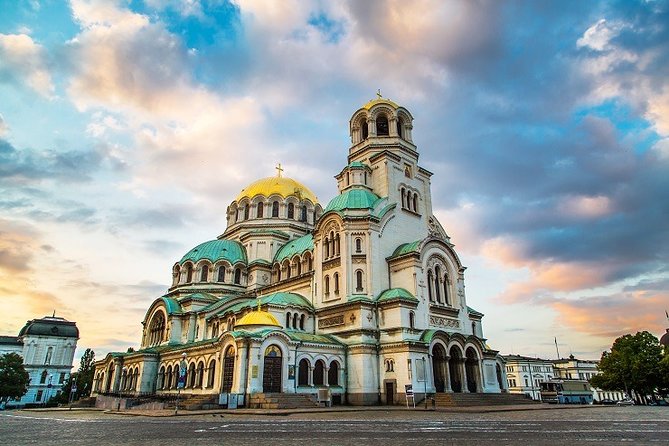
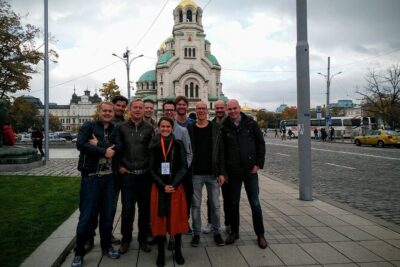
The tour begins at Patriarchal Cathedral St. Alexander Nevsky, at pl. Sveti Aleksandar Nevski in central Sofia. This is a practical meeting point because the cathedral is one of the city’s easiest landmarks to recognize.
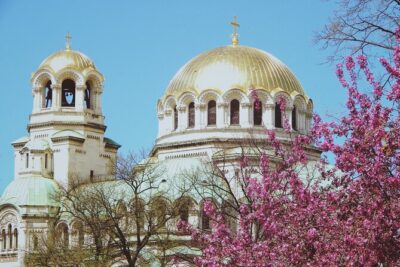
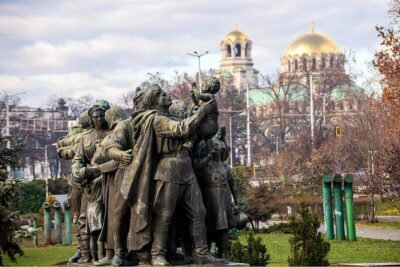
Alexander Nevsky is the visual heavyweight of the morning. It is described as the second-largest cathedral in the Balkans, and its domes give you an immediate sense of the scale of Bulgarian national identity. Your guide can help explain why this building matters beyond its size and appearance.
Take a few minutes here for photographs before the group moves on. The cathedral is also a useful anchor if you arrive early or need to find the starting point after using public transportation.
The meeting time matters. One booking was affected by a public transportation strike and traffic delays, with children in the group adding another layer of slowdown. Give yourself extra time to reach the cathedral, especially if your morning depends on public transit.
St. Sofia Church and the city beneath your feet
St. Sofia Basilica is one of the central stops and one of the best places to understand the city’s identity. The church dates to the sixth century and is closely tied to the medieval name of Sofia. Its presence explains why the capital took its name from the church.
The building is not flashy in the same way as Alexander Nevsky. Its importance comes from age and continuity. Here, the guide’s explanation is especially useful because the significance is easy to miss if you are simply walking past an old brick church.
The tour’s central route also connects with Sofia’s Roman past. The city was known as Serdica, and traces of that earlier settlement remain woven into the modern center. Your guide will point out the relationship between the ancient city and the buildings that followed it.
This is one reason I would choose a guided walk rather than a self-guided circuit for a first visit. You see more than isolated monuments. You begin to understand how different periods occupy the same few blocks.
The fourth-century Rotunda and Roman Sofia
Saint George Rotunda is the oldest church in the town, dating to the fourth century. It is one of the most striking stops because its age is easy to underestimate. The round red-brick structure sits amid later buildings, creating a sharp contrast between Roman-era Sofia and the modern capital.
The Rotunda also represents the Early Christian period included in the tour’s historical sweep. A short explanation from the guide can turn an old building into a marker of how religion and political power changed across the centuries.
Do not expect a long archaeological visit. The value here is the setting and the story. You will see how Roman, Early Christian, Ottoman, Bulgarian, and Soviet layers are packed into the center, often within a few minutes of one another.
The guide-led format also leaves room for questions. Diana received especially strong praise for taking time with the group and allowing photographs without rushing. Ivan was also noted for discussing contemporary Bulgaria along with the monuments, which is useful if you want more than dates and architectural labels.
More walks through Sofia:
- Communist Walking Tour of Sofia
★ 5.0 · 690 reviews - Guided Walking Tour of Sofia
★ 5.0 · 143 reviews - Private city walking tour of Sofia
★ 5.0 · 141 reviews - Sofia Wine Walk
★ 5.0 · 18 reviews
Parliament, the royal palace, and the National Theater
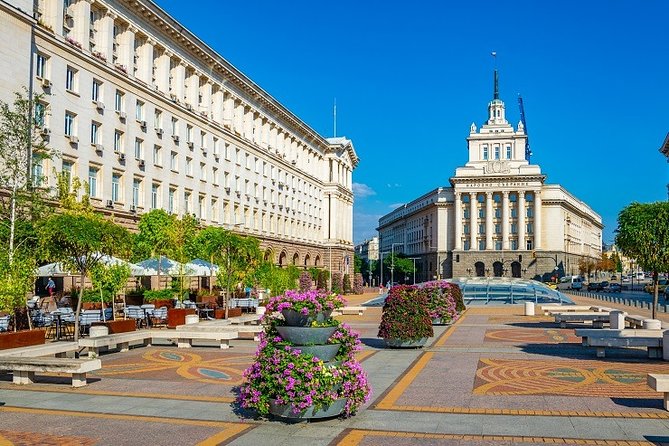
The tour continues past several buildings that explain modern Bulgaria. You will see the Parliament, the former Royal Palace, and the administration of the President. These stops shift the focus from ancient Sofia to the country’s political and national story.
The former Royal Palace helps connect Bulgaria’s capital with its monarchy and state-building years. Parliament and the presidential administration bring you into the present political center. Your guide supplies the context, while the walk shows how close these institutions are to churches, ruins, cafés, and shopping streets.
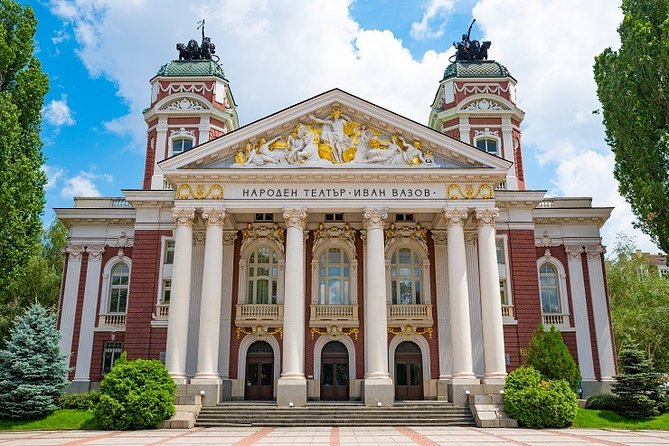
The National Theater Ivan Vazov is another highlight. It is considered one of the most beautiful buildings in the city, and its appearance makes it an easy favorite for photographs. The theater gives the route a cultural pause between government buildings and the older religious sites.
I like this mix because it keeps the walk from becoming a procession of churches. You get architecture, politics, religion, and public life in one route. The tradeoff is that the tour does not appear to include extended visits inside each building, so the emphasis is on exterior views and explanation.
Mineral springs and Sofia’s everyday character
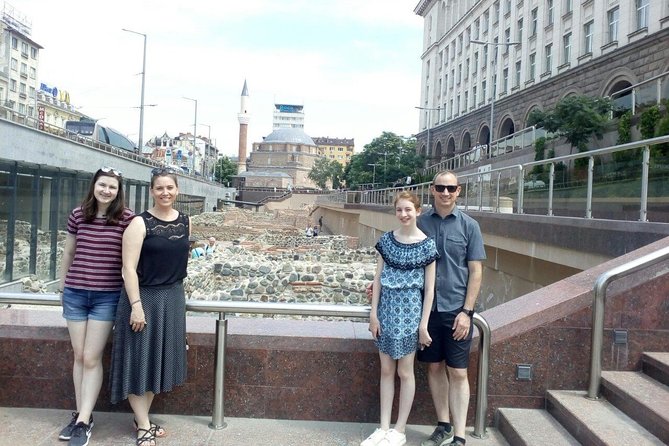
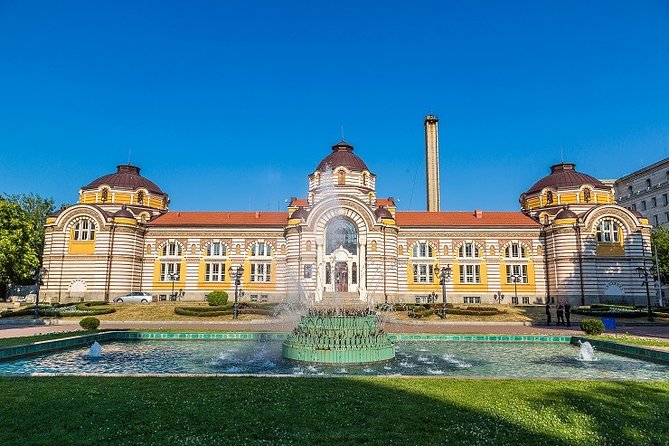
The mineral springs are another stop on the route. They add a practical, everyday side to the city’s story. Sofia’s springs are not just another grand monument, and seeing them helps you understand that the center is shaped by natural features as well as rulers and churches.
This is the sort of detail you could easily miss on a fast walk between major sights. A guide can point out why the springs matter and how they fit into the city’s identity.
The route’s variety is one of its strongest points. One moment you are looking at a Roman structure, then a church, then a government building, then a theater or public spring. For a first morning, this gives you a broad picture without requiring several separate tours.
The walk is in the heart of town and near public transportation. You should still wear comfortable walking shoes. The tour is not presented as difficult, but three hours on central streets, with stops and photographs, is enough to make poor footwear annoying.
A Bulgarian breakfast with banitsa and ayran
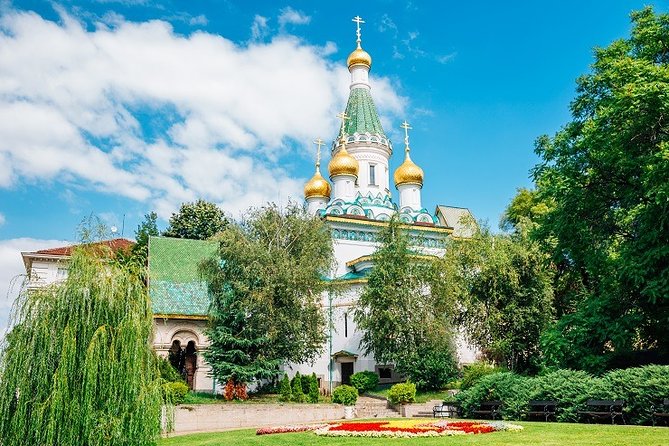
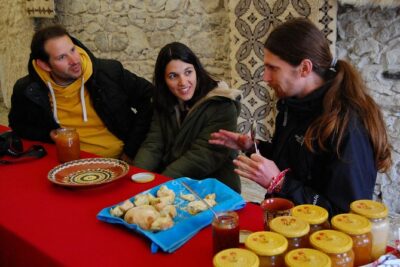
The food stop is meant to happen during the walking tour, reportedly about halfway through in at least one booking. You will have a chance to taste banitsa, ayran, and a dessert, with kozunak and mekitsa also included in the description of the breakfast experience.
Banitsa is the savory centerpiece. The pastry is made from dough and cheese, and it is a classic Bulgarian breakfast choice. Ayran, the salty yogurt drink, is a useful companion because it cuts through the pastry and gives you a taste that is familiar across parts of the Balkans but distinctly at home here.
Kozunak brings sweetness, while mekitsa offers a softer, fried-dough contrast. The exact selection may depend on the pastry shop and what is available that day. One booking described plenty of options, which is helpful if your group has different tastes.
This is not a replacement for a long restaurant meal. It is a brief, local food break that makes the city tour more memorable. I would especially value it if you are new to Bulgarian food and would otherwise spend your first morning ordering something familiar.
There is one important practical warning. A booking received no breakfast or drinks and lasted two hours instead of the advertised three. The guide reportedly did not know the food had been omitted. That appears to be an exception, but the inclusion is important enough to confirm before setting out, particularly if you are booking the tour because of the food as much as the sightseeing.
What the guides add to the walk
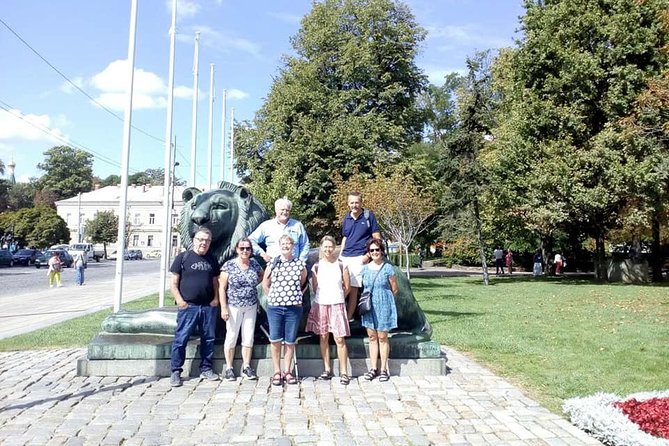
The experience depends heavily on the person leading it. The available feedback points to several guides, including Diana, Ivan, Piotr, and Chimmy.
Diana was praised for being attentive, giving the group time for photographs, and explaining Bulgarian history without rushing. Ivan was noted for his information about Sofia and for talking about contemporary Bulgaria as well as the sights. Piotr was described as offering strong knowledge and a relaxed atmosphere. Chimmy was praised for being a warm host and for showing parts of Sofia the group had not yet seen.
That range matters because this is not an audio guide. Your experience will depend on the guide’s pace, voice, and willingness to answer questions. One guide was described as quiet, though still effective, especially after a delayed start and a group that included children.
The tour is offered in English. It is presented as a private activity, meaning only your group should participate. However, the conditions also say that another booking may be put together with yours on the same date and time. If having a fully separate group is essential, ask for clarification before booking.
Who gets the best value from this tour
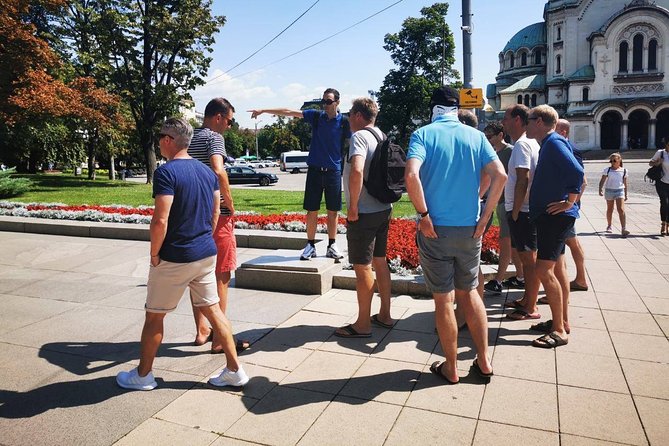
I would choose this walk for a first morning in Sofia, especially if you want a clear introduction before exploring alone. It covers the most important central sights and ends on Vitosha Boulevard, a useful place to continue your day.
Families can make good use of it because the route combines visual variety with a food break. The pace may still need to be adjusted if young children are tired, and the delayed booking shows why arriving early is wise.
The tour also suits you if you want local food without committing to a full restaurant meal. Banitsa and ayran are a simple way to begin trying Bulgarian dishes. If you already know Sofia well, the route may feel basic unless you value the guide’s stories and the chance to ask questions.
The price is not provided, so I cannot judge the exact cost in numbers. In value terms, you are paying for three things: a live guide, a central sightseeing route, and breakfast. That is fair if the tour runs for the full advertised time and includes the food. It is less appealing if you only receive a shortened walk, since many of the sights can be viewed from public streets without a ticket.
The reported rating is 4.6 from nine ratings, with especially strong praise for the guides, relaxed pace, central landmarks, and breakfast. The lower experiences focus on missing food, a shorter duration, or a quieter guide rather than on the route itself.
Practical details before you go
Confirmation is supplied when you book. The start point is Alexander Nevsky Cathedral, and the end point is Vitosha Boulevard in Sofia Center. That makes the tour easy to fit into a day of sightseeing, shopping, or lunch.
The activity is near public transportation, but disruptions can affect arrival times. Plan extra time rather than trying to reach the cathedral at the last minute.
Most people can take part, and comfortable walking shoes are specifically recommended. The experience requires good weather. If poor weather cancels it, you should be offered another date or a full refund.
Cancellation is free up to 24 hours before the start time. Within 24 hours, the amount paid is not refunded, and changes are not accepted. The cut-off uses Sofia’s local time.
Should you book the Sofia walking tour?
Book it if you want a friendly, efficient introduction to central Sofia, with Roman ruins, churches, government buildings, the National Theater, mineral springs, and Bulgarian breakfast in one morning.
I would be most comfortable booking it early in a Sofia stay. You will learn the layout, hear the basic national story, and finish near Vitosha Boulevard, ready to continue on your own. Just allow extra time for the meeting point and confirm that the breakfast and full three-hour schedule are in place.
Skip it if you prefer to explore alone, need long interior visits, or are paying mainly for the food. The route is strongest as a guided orientation, and its value depends on the guide and on receiving the complete experience.
FAQ
Where does the tour start?
The tour starts at Patriarchal Cathedral St. Alexander Nevsky in Sofia Center, at pl. Sveti Aleksandar Nevski, 1000 Sofia, Bulgaria.
Where does the tour end?
The tour ends on Vitosha Boulevard in Sofia Center.
How long does the tour last?
The advertised duration is approximately three hours.
Is breakfast included?
Yes. The included breakfast consists of traditional Bulgarian foods, including banitsa, ayran, and a dessert. The description also includes kozunak and mekitsa.
What is banitsa?
Banitsa is a Bulgarian pastry made with dough and cheese.
What is ayran?
Ayran is a salty yogurt drink commonly served as part of a Bulgarian breakfast.
Which major Sofia sights are included?
The route includes Alexander Nevsky Cathedral, Saint George Rotunda, St. Sofia Basilica, Parliament, the National Theater Ivan Vazov, the former Royal Palace, the administration of the President, and the mineral springs.
Is the tour private?
It is described as a private activity for your group. The conditions also say that another booking may be combined with yours if it is scheduled for the same date and time.
Is the tour offered in English?
Yes. The tour is offered in English with a professional live guide.
What happens if bad weather cancels the tour?
You should be offered a different date or a full refund if poor weather causes the tour to be canceled.
More walking tours in Sofia
- The Most Affordable Private Sofia Walking Tour
★ 4.5 · 18 reviews - Sofia walking tour
★ 5.0 · 13 reviews - Private & Ultimate Sofia 2,5-hour Walking Tour
★ 4.5 · 11 reviews - Sofia Hidden Gems: Small-Group Walking Tour with Tram Ride
★ 5.0 · 7 reviews
Just added around Sofia
- Private Winter Day Trip to the Rila Mountain★ 4.5 · 3 reviews
- Via Ferrata Adventure on Kuklata peak 2257 m in Rila Mountain★ 5.0 · 8 reviews
- Sofia Hidden Gems: Small-Group Walking Tour with Tram Ride★ 5.0 · 7 reviews
- Unique experience to sleep in Rila Monastery★ 5.0 · 6 reviews
- Transfer from Sofia to Stara Zagora★ 5.0 · 3 reviews
- Veliko Tarnovo and Arbanassi Small-Group Day Trip from Sofia★ 4.5 · 13 reviews
- Private transfer from Sofia to Plovdiv or vice versa★ 5.0 · 8 reviews
- Tour to Koprivshtitsa and the Buzludzha monument incl the Seuthes Thracian Tomb★ 3.5 · 3 reviews
Walking Tours, compared.
Sofia Highlights 2 Hour Sightseeing Walking Tour
Read our review →
Food Walk: Bulgarian Food and Culture Tour in Plovdiv
Read our review →
Browse the lists this tour appears in