
Reviewed · FORTRESS AND CASTLE TOURS
Skip the Line: Medieval Tuida Fortress tours
Tuida Fortress is more than a few old walls on a hill. Inside its remains, you can trace Roman, Byzantine, and Bulgarian rule, see the foundations of an Early Christian basilica, and try archery and medieval dress-up if you choose the activity option. The site also gives you broad views over Sliven and the surrounding area.
I like the low price, which makes this an easy addition to a day in Sliven, and I like that an English guide can explain details that faded signs and scattered stones cannot. The medieval games give families and curious adults something to do beyond looking at ruins.
The main drawback is simple: the fortress is much better with a guide. Without one, some visitors may find only partial walls, scrub, and hard-to-read signs. Comfortable shoes are important, and this is not a polished museum visit with every ruin fully restored.
Key points to know before visiting
- Ancient site with several layers: Tuida includes Roman, Byzantine, Early Christian, and First Bulgarian Empire remains.
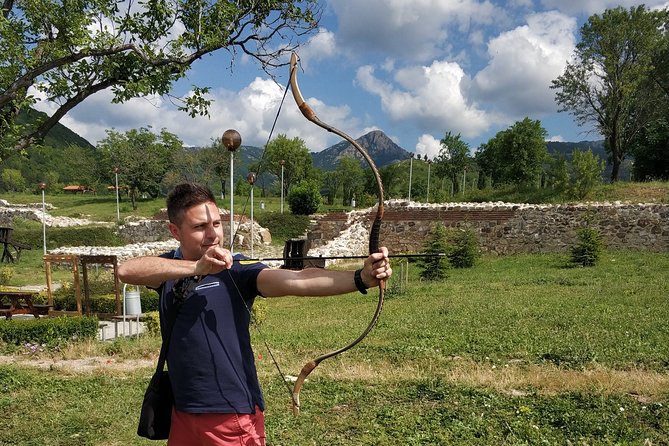
- Archery and costumes add hands-on fun: These activities are available if you book the relevant option.
- An English guide makes a real difference: Stories help explain scattered foundations, gates, towers, and religious buildings.
- The fortress covers about 10 acres: Ruins extend beyond the main walls, including a larger basilica outside the fortified area.
- The ticket costs $8.16 per person: That is good value if you want history plus activities rather than a quick photo stop.
- Allow for uneven walking: Wear comfortable shoes, especially around rough ground and overgrown sections.
Why Tuida Fortress matters in Sliven
Tuida Fortress sits near Sliven, in a region that has changed hands and identities many times. Its story reaches back to late antiquity, when the site served as a fortified settlement and market center.
The fortress escaped destruction during the Gothic invasion of 378 AD. It was later destroyed during the Hun invasions in the fifth century, then rebuilt under Roman Emperor Anastasius I, who ruled from 491 to 518 AD.
That rebuilding preserved the basic shape of the earlier fortress while adding to its defenses and buildings. The site was destroyed again around 598 or 599 AD, probably during attacks by Avars and Slavs.
The story did not end there. Around 705 AD, the area became part of the First Bulgarian Empire after Bulgarian Khan Tervel helped Byzantine Emperor Justinian II regain his throne in Constantinople. A Bulgarian settlement was then established at the fortress, though its original name is unknown.
This later settlement gives Tuida an unusual character. You are not looking at one neat Roman ruin. You are seeing layers of occupation, destruction, rebuilding, worship, trade, and military use.
Other fortresses within reach of Bulgaria:
- Small group tour to Plovdiv, Asen’s Fortress and Bachkovo Monastery
★ 5.0 · 164 reviews - Full-Day Belogradchik Rocks and Belogradchik Fortress from Sofia
★ 5.0 · 75 reviews - Full-Day Plovdiv and Asen’s Fortress Tour from Sofia
★ 4.5 · 36 reviews
Entering the fortress and reading the remains
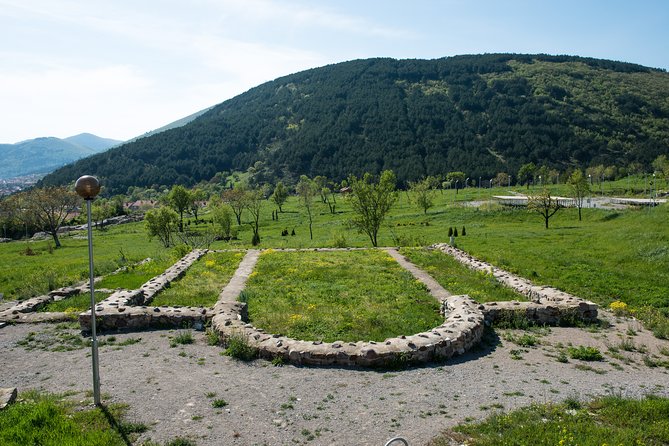
The fortified area covered about 40 decares, or roughly 10 acres. That is large enough to give the site a sense of scale, though much of what you see today is archaeological remains rather than standing buildings.
The excavated walls, towers, and gates help you understand the defensive plan. A guide can point out how the fort was organized and help you picture the buildings that once filled the interior.
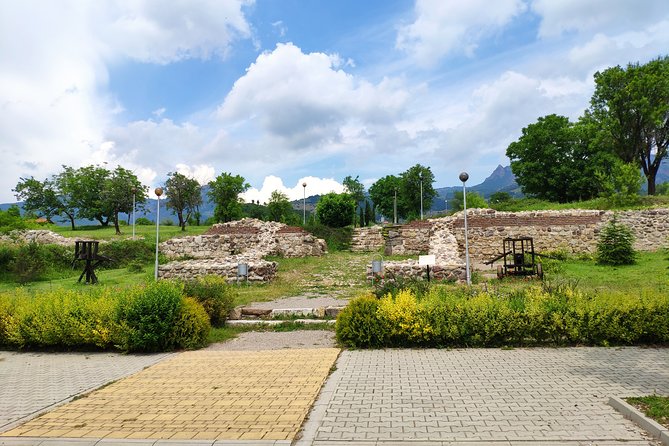
Without explanation, the stonework may look modest. That is the central challenge of Tuida. It does not offer a fully rebuilt citadel or tall medieval towers. You need to use the evidence on the ground and your imagination.
The best way to approach it is as an archaeological site, not as a preserved castle. The value comes from the layers beneath your feet and the stories attached to them.
The fortress also offers views over Sliven and the surrounding countryside. One description of the site calls the views breathtaking, but the practical point is more useful: bring your attention outward as well as down toward the ruins. The elevated position helps explain why the location worked for defense.
The Roman and Byzantine story beneath the stones
Two marble pedestals found at Tuida carry dedications to Apollo and Zeus. They also preserve the fortress name in forms recorded as Tuida or Suida, with written sources using the name Tsoida.
A third-century inscription describes the settlement as a market place. That detail changes the way you picture the site. Tuida was not only a military position. It was also tied to trade and everyday life.
Written sources indicate that Tuida had a bishop from the fourth century onward. Inside the fortress, excavations revealed a three-nave, one-apse Early Christian basilica and a baptistery decorated with murals and mosaics.
The baptistery is one of the more unusual parts of the site. It points to organized Christian worship and to a community large enough to support a formal religious complex.
Outside the fortress walls, archaeologists found the remains of a larger basilica. That suggests the settlement spread beyond the defended area. The walls marked a protected center, but Tuida itself was not confined to that enclosure.
I find this especially helpful when visiting. If you expect everything important to sit inside the walls, the wider ruins may seem disconnected. Instead, they show that the settlement had a life beyond the military core.
The Bulgarian settlement and the aqueduct
After the area entered the First Bulgarian Empire, the Bulgarians rebuilt parts of the fortress walls and restored the aqueduct. New buildings were added inside the fort, and some were covered with marble slabs made by stone cutters from Veliki Preslav, the Bulgarian capital of the period.
Several bricks bear an Ancient Bulgar sign resembling the characters |Y|. A lead seal belonging to Bulgarian Knyaz Boris I Mihail, who ruled from 852 to 889 AD, was also found at the site.
These objects make Tuida more than a Roman or Byzantine stop. They connect it directly to the early Bulgarian state and to the political world of Veliki Preslav.
A guide is particularly useful here because small finds can be hard to interpret. The lead seal and marked bricks may not impress you at a glance, but they provide firm evidence of Bulgarian occupation and administration.
The aqueduct is another reminder that a fortress needed more than walls. Water supply supported military activity and daily life. Even when only parts of the structure remain, its presence helps explain how the settlement functioned.
More of the past around Bulgaria:
- From Bucharest: Small Group Day Trip to Medieval Bulgaria
★ 4.2 · 382 reviews - Full-day Nis and Serbian History Tour from Sofia
★ 4.5 · 90 reviews - Sofia: History and Heritage – Small Group City Tour
★ 5.0 · 84 reviews - Special History And Wine Tour including Wine Tasting
★ 5.0 · 63 reviews
Archaeological finds and everyday life

Excavations at Tuida began in 1982 and resumed in 2004. Archaeologists found iron tools, ceramic vessels, ornaments, coins, and bones from 14 species of wild and domesticated birds.
The bird remains include Bonelli’s eagle, western capercaillie, great bustard, and common pheasant. You will not necessarily see all these objects during a standard visit, but the finds give a more grounded picture of life at the fortress.
They suggest people hunted, kept animals, traded, worked with tools, used decorated ceramics, and handled money. That is useful context because ruins often make ancient settlements seem empty and purely ceremonial.
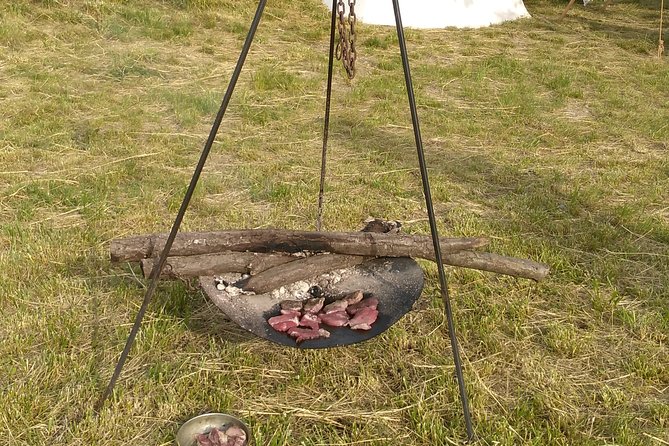
Here, the evidence points to ordinary work and food as well as religion and defense. The site becomes easier to understand when you picture people cooking, repairing equipment, moving goods, and using the fortress as part of a larger community.
Why the English guide is worth adding
The guided option is the strongest choice for most first-time visitors. The fortress has plenty of historical material, but not all of it is obvious from the remains.
An English guide can explain the sequence of destruction and rebuilding, identify the basilica and baptistery, and connect the site to Tervel, Boris I, and Veliki Preslav. The guide can also help you see why the ruins matter when only foundations or broken walls remain.
This matters even more because some on-site signs have been described as faded and difficult to read. A guide fills that gap and turns a scattered archaeological site into a clear story.
The provider is associated with Hristo, who responds to bookings and has highlighted the activity choices at Tuida. The names of the individual on-site guides are not provided, so you should not book expecting a particular person. You can expect the tour to be offered in English.
If you prefer to explore alone, the site can still work. Just keep your expectations realistic. You may spend less money and move at your own pace, but you will have less help identifying what you are seeing.
Medieval dress, archery, and games
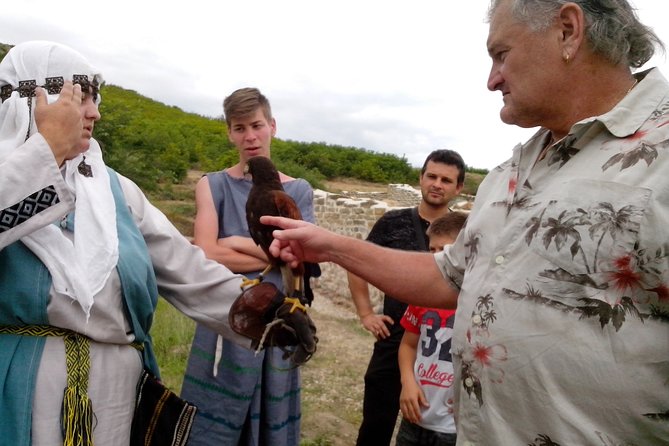
The optional activities give Tuida a more active feel. If you book the appropriate option, you can try archery and wear medieval clothing for photos.
Medieval games are also offered as part of the on-site entertainment. These features are especially useful for families, since children may not want to spend a full visit studying foundations and inscriptions.
Adults can enjoy them too. Dressing in period clothing and trying archery gives you a physical connection to the site, even if the activities are modern recreations rather than archaeological demonstrations.
The important detail is that these activities are not included automatically in every booking. Check that you select the option you want. The basic experience and the activity version are not the same visit in practical terms.
You can also take photos during the experience. The costumes, fortress walls, and open views provide better photographs than the ruins alone, though you should still treat the archaeological remains with care.
Is $8.16 good value?
At $8.16 per person, this is an inexpensive cultural stop. The value depends on what you expect.
If you want a fully reconstructed medieval castle with furnished rooms, this may feel limited. Much of Tuida consists of walls, foundations, towers, gates, and archaeological traces. Some areas may also have vegetation growing around the remains.
If you want an affordable introduction to Sliven’s past, the price works well. You get access to a site with several historical periods, an e-guide, and the possibility of a guided visit or activities depending on your booking.
The price becomes even easier to justify if you choose the English guiding and use the visit as part of a larger day in Sliven. You do not need a major budget for this stop, and it offers more substance than a quick look at a monument from outside.
Food, drinks, and personal expenses are not included. Plan to handle those separately, since the ticket is focused on the fortress experience itself.
How long to allow and what to wear
The experience is listed as lasting about one day, but no precise touring time is provided. The practical approach is to keep your schedule flexible rather than planning a tight connection afterward.
A guided visit with activities will naturally take longer than a quick independent walk. If you want to hear the story, take photos, try archery, and look around the ruins, do not treat Tuida as a five-minute stop.
Wear comfortable shoes. The site includes archaeological ground, uneven surfaces, and areas where vegetation may make walking less direct.
Most people can participate, and service animals are allowed. The maximum group size is 50 people, so the experience can be fairly large at full capacity. A smaller group may make it easier to hear the guide and ask questions, but the available information does not promise a particular group size.
The ticket is mobile, which is convenient for a day of sightseeing. Confirmation is provided at booking, and the experience is offered in English.
Who will enjoy Tuida Fortress most?
I would recommend Tuida to several kinds of visitors:
- History-minded visitors who enjoy seeing Roman, Byzantine, Christian, and Bulgarian remains in one place.
- Families who want medieval games, costumes, and archery to balance the historical material.
- Budget-conscious visitors looking for a low-cost activity in Sliven.
- Photographers interested in fortress walls, views, costumes, and archaeological details.
- Independent visitors who are willing to use an e-guide or book the English guide for more context.
I would be more cautious if your main goal is a restored castle with complete rooms and dramatic towers. Tuida is an archaeological site, and its appeal depends on your interest in reading the remains.
The visit also suits people who want something less predictable than a standard city walk. Sliven is known as the town of the 100 chieftains, and Tuida gives you a direct connection to the area’s older military and religious past.
Book Tuida Fortress or skip it?
Book it if you are in Sliven and want an affordable site with genuine historical depth, especially if you choose the English guide or the archery and medieval dress option. The combination of fortress remains, basilicas, a baptistery, an aqueduct, early Bulgarian evidence, and family activities gives the visit more range than the modest walls suggest.
Skip it if you want polished presentation without uneven ground, vegetation, or archaeological gaps. The fortress can feel sparse when explored without explanation, and the signs may not do enough work on their own.
For most visitors, I would choose the guided option. At $8.16, Tuida is a low-risk addition to a Sliven itinerary, and the guide helps turn stones and foundations into a place with a clear human story.
FAQ
Where is Tuida Fortress located?
Tuida Fortress is located in Sliven, Bulgaria.
How much does the experience cost?
The listed price is $8.16 per person.
How long does the experience last?
The duration is listed as one day, approximately. No more precise visit length is provided.
Is the experience offered in English?
Yes. The experience is offered in English.
Is the ticket mobile?
Yes. A mobile ticket is available.
Is guiding included?
Guiding is included if you book the guiding option. An e-guide is also included.
Are archery and medieval costumes included?
Archery and medieval dresses are included if you book that option. They are not automatically part of every booking.
What should I wear?
Wear comfortable shoes, since the site includes archaeological remains and uneven walking areas.
Can I cancel for a refund?
Yes. You can receive a full refund if you cancel at least 24 hours before the experience start time. Cancellations or changes made less than 24 hours before the start time are not refunded or accepted.
Just added around Bulgaria
- Self-guided Tour in Tsarevets Fortress★ 4.0 · 9 reviews
- Discover Veliko Tarnovo at Your Pace: Private or Self-guided tour★ 4.0 · 11 reviews
- Monasteries and Waterfalls Tour from Veliko Tarnovo★ 5.0 · 8 reviews
- Wine Experience & Tasting Hub★ 5.0 · 6 reviews
- Full-Day Private Sightseeing Tour to the North of Varna★ 5.0 · 4 reviews
- Varna Exquisite Wine Tasting★ 5.0 · 5 reviews
- Private Cape Kaliakra & the Balchik Botanical Gardens from Varna★ 5.0 · 3 reviews
- Guided Nessebar Sightseeing Tour with Pick Up★ 5.0 · 6 reviews
Fortress and Castle Tours, compared.
Small group tour to Plovdiv, Asen’s Fortress and Bachkovo Monastery
Read our review →
Full-Day Belogradchik Rocks and Belogradchik Fortress from Sofia
Read our review →
Full-Day Plovdiv and Asen’s Fortress Tour from Sofia
Read our review →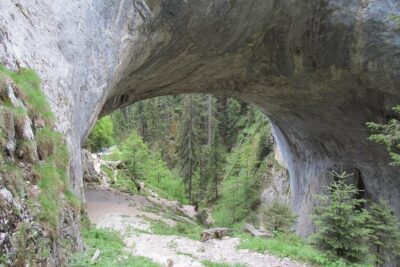
Wonderful Bridges-Bachkovo Monastery-Assen’s Fortress – day tour from Plovdiv
Read our review →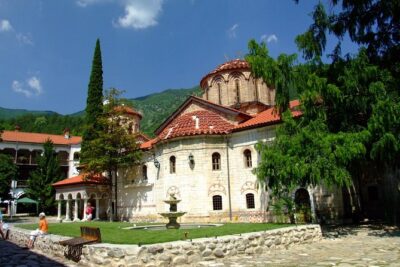
Bachkovo Monastery & Asen’s Fortress – day tour from Plovdiv
Read our review →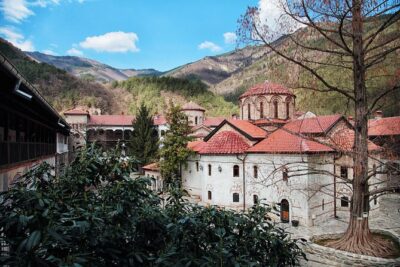
Private trip to Bachkovo Monastery and Assen’s Fortress
Read our review →
Browse the lists this tour appears in